
Best Creative Coaching for Artists: 6 Options Compared
Quick Summary
Creative coaching is a structured, one-to-one or small-group process in which a coach helps artists define what they want to make, why it matters, and what consistent action looks like. A good coach asks sharper questions and holds you to commitments rather than writing your work or telling you what it should say.
- Clarity is usually the first focus, turning a vague wish into a specific 30-day goal.
- Start with one project and one measurable outcome, such as two demo tracks sent to one collaborator.
- Set a draft deadline before you feel ready, then review the work only after it is complete.
- Group accountability suits self-motivated artists who drift, while one-to-one suits specific blocks or confidence loss.
- Expect a weekly or fortnightly session of roughly an hour, plus short work between sessions.
Table of Contents
- What Creative Coaching for Artists Actually Covers
- Creative Coaching Versus Therapy, Mentoring, and Business Consulting
- Artist Accountability Group vs One-to-One Coaching
- Creative Coaching for Artists Online: Formats, Logistics, and Time Commitment
- Career Coaching for Artists and Creative Practice Accountability
- Metal Goddess Studios Options Compared: Pricing, Fit, and Where to Start
- Booking Your Creative Longevity Discovery Session
- Frequently Asked Questions
What Creative Coaching for Artists Actually Covers
Last Updated: November 15, 2026
Most artists who search for creative coaching are not looking for another motivational speaker. They have hit a wall that talent alone cannot fix: the spark is dimmer, the self-doubt is louder, and the next project feels impossible to start.
Creative coaching is a structured, one-to-one or small-group process in which a coach helps you define what you want to make, why it matters, and what consistent action looks like.
Creative clarity and goal setting
Clarity is usually the first thing a coaching engagement tackles. Many artists have a vague sense of wanting to "make more" or "get back to the studio" without a defined project or timeline.
Starting with one project and one measurable outcome for the next 30 days is a practical approach. Broad goals such as "write more songs" tend to stall, while "finish two demo tracks and send them to one collaborator" gives you something to check off.
Self-doubt, the inner critic, and perfectionism
Self-doubt and perfectionism are the most common reasons experienced artists stop creating. A common pattern is that an artist with decades of work begins to judge new material against their best past output, and the comparison makes starting feel pointless.
Watch for perfectionism disguised as preparation. Rewriting the same bridge for weeks, or waiting for the perfect studio setup, usually protects you from the risk of finishing something imperfect.
Creative Coaching Versus Therapy, Mentoring, and Business Consulting
Creative coaching is often confused with three other services, and the differences matter when you are choosing where to invest. If you are still asking whether creative coaching is worth the time and money, this guide answers that question. Therapy addresses clinical concerns such as anxiety or depression, and a creative coach is not a licensed therapist. If burnout is affecting your health or sleep, a medical or mental health professional should be part of the picture.
Mentoring usually means learning from someone who has achieved what you want to achieve, and advice flows mainly one way. Business consulting focuses on the commercial side of a career, such as pricing, contracts and marketing strategy. Creative coaching sits between these: it concentrates on your creative practice, your mindset, and the habits that sustain output over time. Some artists combine a coach with a business advisor, and that combination often works well.
Artist Accountability Group vs One-to-One Coaching
Most artists default to whichever format a coach happens to sell, but the format should follow your block. If you are unsure whether coaching beats self-guided habit tracking, compare the two directly. A group and a one-to-one engagement solve different problems, and choosing the wrong one is the most common reason coaching feels like it did not work.
What each format actually does
An accountability group is a small cohort, usually four to eight artists, meeting on a fixed schedule with a shared check-in structure. You report progress, set the next commitment, and hear how peers are handling the same obstacles. The peer effect is real: most practitioners find that artists show up more consistently when someone else is expecting a report. The trade-off is airtime. In a 60-minute group session with six people, you get roughly ten minutes of focused attention, so a deep personal block, a career crisis, a collapse in confidence, a project that has stalled for a year, rarely gets the room it needs.
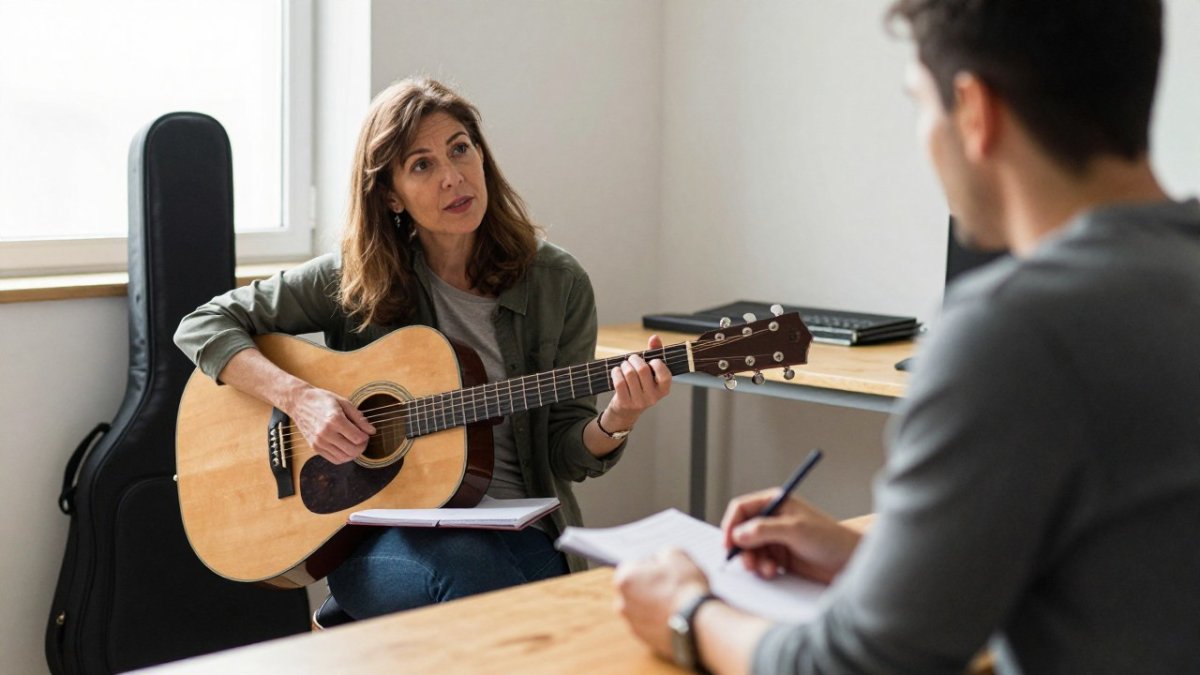
One-to-one coaching gives you the full session and a coach who tracks your history across months. It suits artists dealing with confidence loss, a major transition, or a block that has resisted self-help. It costs more per hour and depends heavily on fit: a coach who is excellent for a songwriter may be wrong for a painter, because the questions that unlock one practice do not automatically unlock another.
A comparison framework you can apply to any coach
Rather than ranking coaches, compare them on the dimensions that actually predict whether coaching will help you. Use this as a checklist when you speak to any provider.
- Specialty and medium. Does the coach work with your discipline, or only with creative professionals in general? A coach who understands how a musician's release cycle or a visual artist's exhibition timeline works will ask better questions.
- Format and cadence. Weekly, fortnightly, or monthly? Group, one-to-one, or a hybrid? Ask how sessions are structured and what happens between them.
- Qualifications and approach. Ask what training the coach has, what framework they use, and whether they have supervised or mentored other artists. Coaching is not a licensed profession in most places, so the burden is on you to ask.
Questions to ask before you commit
A short list of questions separates a serious coach from a persuasive one. Ask: What does a typical engagement look like from first session to finish? How do you handle it when a client misses commitments?
Watch out: a coach who cannot describe their approach in plain language, or who promises a specific creative outcome, is usually selling motivation rather than a process.
How to decide
If you are self-motivated but drift without deadlines, start with a group, it is usually cheaper and the peer accountability is enough. If you are facing a specific block, a transition, or a confidence problem, one-to-one is the better investment. If you are unsure, book a single discovery session with each format and compare how the coach listens, not just what they promise.
Creative Coaching for Artists Online: Formats, Logistics, and Time Commitment
Online creative coaching has become the norm, and it works well for most artists who cannot travel to a studio. Sessions typically run by video call, with a shared document or tracker for goals between meetings.
Time commitment is the practical concern many artists raise. Expect a weekly or fortnightly session of roughly an hour, plus a short amount of work between sessions. Be realistic about your schedule before you start.
Career Coaching for Artists and Creative Practice Accountability
Career coaching addresses the professional side of a creative life: how you position your work, how you approach opportunities, and how you recover after a setback such as a rejected project or a lost gig. This is different from creative coaching, which focuses on the making itself, although the two often overlap. The practical distinction matters because artists often hire a career coach for a mindset problem, or a creative coach for a business problem, and then conclude coaching does not work.
What career coaching covers that creative coaching does not
A career coach typically works on positioning and opportunity: how you describe your work to a gallery, a label, a grant panel, or a client; how you build a pipeline of opportunities rather than waiting for one; and how you handle the commercial side without letting it distort the art. A creative coach works on the practice itself, the habits, the blocks, the relationship with the work.
Accountability that actually changes behavior
Accountability is the thread connecting both. Whatever format you choose, the value comes from having someone review your commitments and ask what happened when you did not follow through. A common mistake is treating coaching as a one-off motivational boost.
The mechanism is simple and easy to underestimate. Each session ends with one or two specific commitments for the next period. The next session opens by reviewing them.
Measurable outcomes and how to evaluate progress
Because coaching is not therapy and does not produce a clinical measure, artists need practical indicators. The following indicators can help you judge progress more concretely than a feeling of motivation:
- Completed projects. Count finished work, not started work. A draft that never ships is not progress.
- Consistent studio time. Track sessions per week or hours per week. Consistency matters more than duration.
- Clearer goals. Can you state your next project and its deadline in one sentence? If not, clarity has not landed yet.
- Improved follow-through. Compare commitments made to commitments kept across sessions. This is the single best indicator of whether accountability is working.
Reviewing these indicators every few sessions, rather than every week, can make trends easier to see. If progress stalls across several reviews, it may be worth changing the format, the coach, or the goal.
Watch out: a coach who never reviews commitments, or who lets you leave a session without a specific next action, is providing conversation rather than accountability. Conversation can feel valuable and still change nothing.
When to combine coaching with other support
Some artists need more than one kind of help. A coach can work alongside a business advisor on pricing and contracts, or alongside a therapist when burnout is affecting health and sleep. The combination works when each provider knows what the other is handling, so the artist is not getting contradictory advice. Ask your coach how they coordinate with other professionals, and be honest if you are already working with someone else.
Metal Goddess Studios Options Compared: Pricing, Fit, and Where to Start
Metal Goddess Studios offers several entry points. You can also see what the Creative Career Recovery Program costs before choosing.
The discovery session is an introduction to coaching, to help you clarify your needs before deciding on a longer engagement.
The Rockstar's Blueprint eBook and eWorkbook bundle ($39.00) combines a full strategy guide with printable, fillable planning pages you can work through on your own schedule.
The article's options and prices are summarised below so you can compare them at a glance.
| Option | Price | Best for |
|---|---|---|
| Creative Longevity Coaching Discovery Session | $0.00 | Clarifying needs before committing |
| The Rockstar's Blueprint eBook and eWorkbook bundle | $39.00 | Self-guided structure with fillable planning pages |
| Reignite Your Creative Fire 7-day challenge | $4.95 | Creative late bloomers and artistic novices |
Price
Booking Your Creative Longevity Discovery Session
If you recognise yourself in the burnout, self-doubt or stalled-practice patterns described above, the simplest next step is to book a discovery session.
You can book a discovery call with Metal Goddess Studios to talk through your next steps. If it feels like a fit on both sides, you will receive a simple agreement and intake questionnaire. Start with one honest conversation, then decide.
Frequently Asked Questions
What does a creative coach do for artists?
A creative coach works with artists on the parts of the practice that stall: creative clarity, goal setting, self-doubt, perfectionism, and sustaining a regular working rhythm. At Metal Goddess Studios, coaching is tailored to musicians, artists, and creators over 40 and combines professional development with wellness strategies such as plant-based fuel, movement, and recovery. Sessions focus on the patterns keeping you stuck and on building habits you can keep through busy or difficult periods, rather than on a rigid program.
Is one-to-one coaching or an artist accountability group better?
One-to-one coaching suits artists who need a tailored plan, a confidential space to discuss burnout or confidence loss, and a coach who adjusts to their specific situation. An accountability group suits artists who work well with regular check-ins and peer encouragement at a lower individual cost. Many artists over 40 start with a one-to-one discovery session to clarify their needs before choosing a format, and the Creative Longevity Coaching Discovery Session is a 30-minute call for exactly that decision.
How much does creative coaching for artists cost?
Metal Goddess Studios offers a Creative Longevity Coaching Discovery Session with no charge listed in its catalogue, a Reignite Your Creative Fire eBook for 4.95, and The Rockstar's Blueprint eBook and eWorkbook bundle for 39.00. Compare the cost against how much time and momentum you expect to recover, not just the sticker price.
Can a coach help me build a consistent creative practice?
Coaching can support a sustainable creative rhythm, aimed at resetting after setbacks rather than aiming for perfect consistency. The Rockstar's Blueprint eBook and eWorkbook bundle includes fillable trackers and planning pages for mapping rituals and building a sustainable routine, which you can use alone or alongside coaching.
