
Nutrition Tips for Touring Musicians: A 2026 Guide
Table of Contents
- Why Nutrition Matters for Touring Musicians Over 40
- Healthy Eating on Tour: Building Your Road Nutrition Strategy
- Touring Musician Meal Planning: Templates and Timing
- Pre-Show Meals for Musicians: Timing and Composition
- Healthy Snacks for Musicians on the Road
- Hydration, Caffeine, and Sleep: Managing Energy Across Tour Days
- Dietary Restrictions, Allergies, and Budgeting on Tour
- Conclusion: Sustaining Your Creative Momentum Through Nutrition
- Frequently Asked Questions
Last Updated: October 16, 2026
Why Nutrition Matters for Touring Musicians Over 40
Nutrition for touring musicians isn't optional, it's the foundation of sustained performance.
At Metal Goddess Studios, we empower musicians, artists, and creators over 40 to sustain their creative journey.
Touring makes healthy eating nearly impossible without a plan: irregular meal times, limited food access, late-night performances, and constant travel all conspire against nutrition. You need touring musician meal planning that accounts for the road's actual constraints.
Healthy Eating on Tour: Building Your Road Nutrition Strategy
A road nutrition strategy means accepting different constraints than home life: no full kitchen, no normal meal times, no access to every food you'd prefer. The goal isn't replicating home nutrition perfectly, it's making the best choices available.
Planning Around Irregular Touring Schedules
Irregular schedules are the first obstacle: an 8 PM set one night, 10 PM the next, sound checks at noon or 4 PM, van meals at 2 AM.
Plan nutrition around tour dates and performance times, not clock times. Map each week's travel and performances, then build meal timing backward from performance times.
Keep a touring musician meal planning template updated weekly with travel days, performance times, and realistic meal windows.
Food Safety and Storage Without Reliable Refrigeration
Food safety on the road is a real concern most guides ignore: minimal refrigeration, hot weather, and food eaten hours after purchase.
The practical rule: avoid foods needing consistent refrigeration unless you have reliable cooling, limit fresh meat, dairy, and soft cheeses.
Prepare foods at home or buy fresh the day you need them. Pre-cooked grains and proteins keep 3-4 days in airtight containers if kept cool.
Touring Musician Meal Planning: Templates and Timing
A touring musician meal planning approach that works accounts for performance times, travel logistics, and energy demands. Here's how to structure eating around a typical tour day.
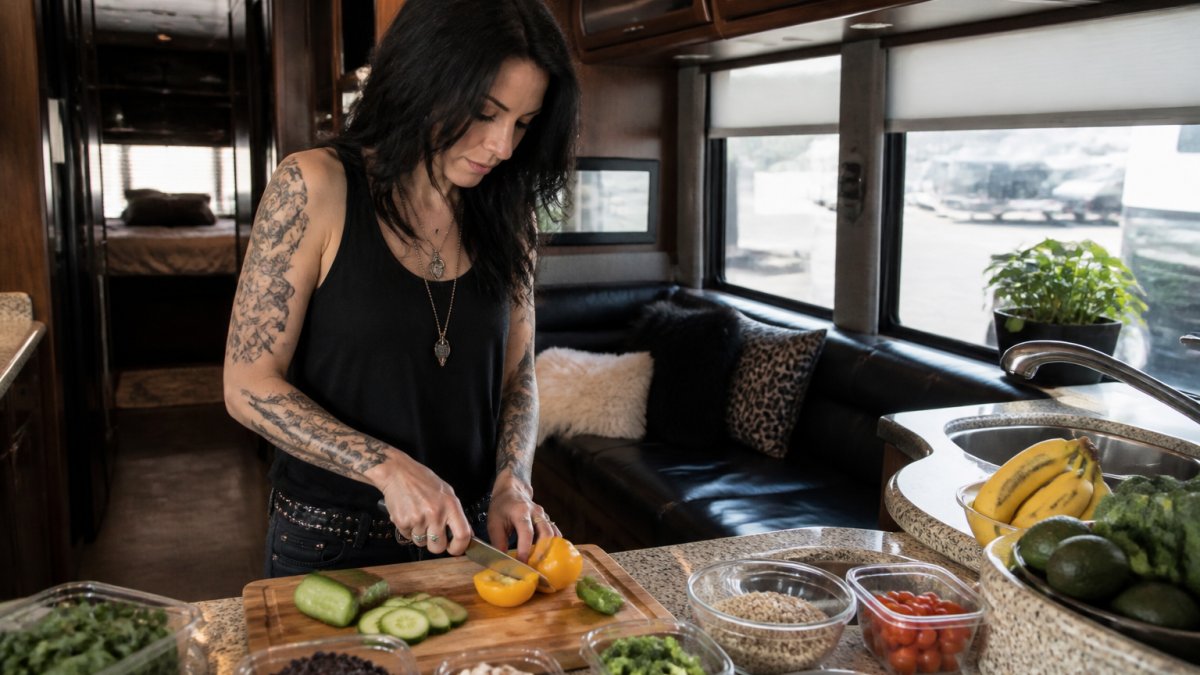
Sample Tour-Day Meal Schedule
A realistic template for a musician performing at 9 PM with a 3-hour drive beforehand:
- 12:00 PM (Noon): Substantial breakfast-style meal: oatmeal with nuts and fruit, or whole-grain toast with nut butter. Include protein and complex carbohydrates.
- 3:00 PM: Snack: fruit, nuts, or a protein bar, light enough not to sit heavy, substantial enough to stabilize blood sugar.
- 5:30 PM: Pre-show meal (3 hours before performance): grilled chicken or tofu with quinoa and roasted vegetables, or a hearty vegetable and lentil stew.
- 8:00 PM: Quick energy booster (1 hour before): banana with almond butter, or a small smoothie with protein powder, easily digestible, won't cause cramping.
Adjust timing to your actual schedule. The principle: never perform on an empty stomach, never eat a heavy meal immediately before performing, and always eat within 30-60 minutes after.
Building Balanced Meals with Protein and Complex Carbohydrates
Every meal and snack should pair protein with complex carbohydrates to stabilize blood sugar and sustain performance.
Protein that travels well: canned fish, nuts, seeds, nut butters, plant proteins (beans, lentils, tofu), protein powder, hard cheeses.
A balanced meal: palm-sized protein + fist-sized complex carbohydrates + vegetables.
Many touring musicians find plant proteins (lentils, beans, nuts, seeds) easier on tour than fresh meat, shelf-stable, no refrigeration, and easy to pair with grains and vegetables.
Pre-Show Meals for Musicians: Timing and Composition
What you eat before a performance affects your voice, stamina, focus, and physical control. Pre-show meals for musicians must fuel performance without digestive distress.
What to Eat 2-3 Hours Before Performance
The 2-3 hour window before performance is your main meal window: enough fuel for a full set, but not so much that you're still digesting on stage.
Avoid heavy fried foods, excessive fat (slows digestion), high-fiber foods right before performing, and large quantities of sugar (spikes and crashes).
Portion size matters: satisfied and fueled, not bloated. A typical pre-show meal is 400-600 calories, depending on body size and set length.
Quick Energy Boosters in the Final Hour
In the hour before performing, choose something easily digestible that provides quick glucose without cramping: a banana with almond butter, a small smoothie with protein powder and fruit, nuts with dried fruit, or whole-grain toast with honey.
The goal is topping off energy without anything sitting in your stomach. Keep it under 200 calories, 30-60 minutes before performing.
Healthy Snacks for Musicians on the Road
Snacking strategy determines whether you maintain stable energy or crash between meals. Most touring musicians eat more snacks than full meals, so snack quality matters enormously.
Portable Snacks That Travel Well
Avoid snacks that are mostly sugar with little protein: candy, cookies, sugary granola bars, and energy drinks. These cause blood sugar spikes and crashes that worsen fatigue and mental fog.
Carry 2-3 snack options in your bag at all times, so hunger leads you to something nourishing instead of whatever's convenient at a gas station.
Finding Nutritious Options at Venues and Roadside Stops
You won't always have access to your packed snacks. Venues, gas stations, and roadside restaurants are your reality. The key is knowing what to look for when options are limited.
At gas stations: nuts, seeds, whole fruits, nut butter packets, hard cheeses, canned fish, whole-grain crackers.
Healthy eating on tour means making the best choice available, not the perfect choice.
Hydration, Caffeine, and Sleep: Managing Energy Across Tour Days
Hydration, caffeine, and sleep form the third pillar of touring musician nutrition and energy management. You can eat perfectly and still crash if you're dehydrated, over-caffeinated, or sleep-deprived.
Hydration Strategies for Long Sets and Hot Venues
Most touring musicians are chronically dehydrated. You're performing under hot lights, sweating, breathing heavily, and often forgetting to drink water between songs.
The strategy: drink water consistently throughout the day, not just during or after performance.
Electrolyte drinks (coconut water, sports drinks with balanced sodium and potassium) are useful after long, sweaty performances, but water is your primary tool.
Caffeine Timing and Sleep Recovery on the Road
Caffeine is a touring musician's temptation and trap. Late nights, irregular schedules, and the need to stay alert during travel make caffeine seductive.
The rule: no caffeine after 2 PM if you want to sleep that night.
Sleep is where recovery happens: your body repairs muscle, consolidates memory, and restores mental clarity.
A simple sleep routine (same bedtime when possible, dark and quiet space, no screens 30 minutes before bed) helps your body adapt to tour schedules.
Dietary Restrictions, Allergies, and Budgeting on Tour
Touring musicians often have dietary restrictions, allergies, or ethical commitments around food. The road makes these harder to manage, but not impossible with planning.
Plant-Based Eating and Culturally Appropriate Options
Plant-based eating has become more accessible on tour as restaurants and venues increasingly offer vegetarian and vegan options.
The advantage of plant-based eating on tour is that many plant proteins are shelf-stable and need minimal refrigeration, canned beans, lentils, nuts, seeds, and nut butters travel better than fresh meat.
Culturally appropriate food options matter for your wellbeing. If certain cuisines or foods are important to you, seek them out or plan ahead.
Grocery Shopping and Budget Strategies by Tour Setup
Budget matters. Touring musicians often operate on tight margins, and food costs add up fast.
Buy shelf-stable staples in bulk at the start of a tour leg: nuts, seeds, grains, canned beans, canned fish, nut butters, dried fruit.
Musicians who plan meals ahead and shop strategically can often save money on food compared to those who eat opportunistically.
Conclusion: Sustaining Your Creative Momentum Through Nutrition
Nutrition for touring musicians over 40 isn't about a rigid diet or perfection on the road. It's about consistent, intentional choices that protect your energy, voice, and long-term creative career.
Metal Goddess Studios helps touring musicians and creative professionals over 40 rebuild energy and consistency through plant-based fuel, movement, and recovery strategies tailored to your actual life. When you're ready to move beyond generic wellness advice to strategies designed specifically for touring performers, Metal Goddess Studios offers tailored coaching and planning tools that integrate nutrition, recovery, and creative resilience.
Frequently Asked Questions
What should touring musicians eat before a performance?
Eat a balanced meal 2-3 hours before performance: complex carbohydrates (whole-grain bread, oatmeal, quinoa), lean protein (fish, nuts, plant-based options), and vegetables for sustained energy and stable blood sugar. Avoid heavy, greasy foods that slow digestion. In the final hour before taking the stage, have a quick carbohydrate snack like fruit or a small portion of whole grains to boost immediate energy without causing discomfort during your set.
How can touring musicians stay hydrated during long tours?
Drink water consistently throughout the day, not just during performances. Aim for 8-10 glasses daily, increasing intake in hot venues or during physically demanding sets. Carry a reusable water bottle and refill at every opportunity. Limit alcohol and caffeine before performance, as both dehydrate. For extended touring, monitor urine color, pale yellow indicates good hydration. During late-night travel days, prioritize water over sugary drinks to maintain energy levels and support recovery.
What are the best portable snacks for musicians on the road?
Choose snacks that combine protein and complex carbohydrates: nuts and seeds, whole-grain crackers with nut butter, dried fruit mixed with unsalted nuts, fresh fruit (apples, bananas), hard cheeses, and whole-grain energy bars. These travel well without refrigeration and provide sustained energy between meals. Avoid high-sugar snacks that spike blood sugar and lead to energy crashes. Pack snacks in individual portions for convenience during travel days and between sets.
How do touring musicians manage irregular meal times and late-night eating?
Plan meals around your actual tour schedule rather than fighting it. Eat substantial meals when food is available, even if timing is unconventional. Keep healthy snacks accessible for late-night hunger. Avoid heavy meals immediately before sleep; instead, have a light snack combining protein and carbohydrates 1-2 hours before bed. On days with performances, prioritize pre-show nutrition and post-show recovery eating to maintain energy and prevent burnout. Consider meal-prep strategies during less demanding tour legs.
What role does plant-based nutrition play in sustaining energy for touring musicians?
Plant-based foods provide sustained energy through complex carbohydrates, fiber, and plant proteins. Include quinoa, whole grains, legumes, nuts, seeds, and vegetables in your touring diet. These foods support stable blood sugar and sustained energy across long travel days and multiple performances. Plant-based options are often more accessible at roadside stops and venues, making them practical for touring. Pair plant proteins with vitamin C sources to enhance iron absorption, ensuring adequate nutrient intake on the road.
How can touring musicians balance nutrition with budget constraints?
Shop at grocery stores rather than relying on venue and roadside food, which is expensive and often unhealthy. Buy versatile staples in bulk: whole grains, beans, nuts, frozen vegetables, and seasonal fruit. Plan meals around what's on sale and available locally. Choose store brands over premium options. Prepare simple meals in tour accommodations when possible. Invest in a cooler for the tour bus to extend the life of perishables and reduce food waste, ultimately lowering costs while improving nutrition access.
Your body at 40+ is capable of sustaining a demanding touring schedule, but only if you fuel it intentionally. Start with one change this week: map out your next tour's performance times and build your meal schedule backward from those times. The stability you create will ripple across your energy, focus, and confidence on stage.