
Creative Voice Coaching for Musicians: A Practical Guide
Quick Summary
Creative voice coaching is the practice of working on your artistic expression, vocal identity and sustainable creative rhythm together rather than as separate problems. It goes beyond technique to ask whether a sound fits the artist you are becoming, aiming for a voice that sounds like you and can keep performing.
- Traditional lessons ask if technique is correct; creative voice coaching also asks if it sounds like you.
- Vocal folds lose elastin and moisture over time, often narrowing comfortable range after 40.
- Creative blocks can stem from fatigue, fear, unclear goals, comparison or a skill gap, each needing a different response.
- Track sleep, recovery days and creative output in a simple journal to spot patterns early.
- Stop and see a laryngologist or speech-language pathologist if you feel pain or lose range suddenly.
Table of Contents
- What Creative Voice Coaching Covers Beyond Technique
- Vocal Health for Aging Singers: What Changes After 40
- Creative Blocks in Musicians and How Coaching Addresses Them
- Artist Development for Musicians Over 40: Finding Your Artistic Identity
- Self-Assessment Tools and Long-Term Artistic Sustainability
- Choosing a Coach and Booking Your First Discovery Session
- Frequently Asked Questions
What Creative Voice Coaching Covers Beyond Technique
Last Updated: November 4, 2026
Creative voice coaching for musicians goes well beyond hitting the right notes. Creative voice coaching considers the whole performer: the body that carries the sound, the mind that decides what to sing, and the habits that keep the work going for decades. For musicians over 40, that wider view is often what makes the difference between a voice that fades and one that keeps developing.
Creative voice coaching is the practice of working on your artistic expression, your vocal identity and your sustainable creative rhythm together, rather than treating them as separate problems. The goal is a voice that sounds like you and can keep performing, not just a voice that executes exercises correctly.
How it differs from traditional vocal training
Traditional vocal training usually starts with a fixed curriculum: range, breath support, resonance, diction. Those skills matter, and creative voice coaching does not dismiss them. The difference is in what the work is aimed at.
Traditional lessons ask, "Is this technique correct?" Creative voice coaching also asks, "Does this sound like the artist you are becoming?" A singer-songwriter with thirty years of performing may already have sound technique. For a deeper practical guide to wellness coaching for aging artists, see how this approach applies over a long career. What they often lack is a clear sense of artistic direction, or a way to recover when confidence drops.
The neuroscience of creative expression
Creative output depends on more than practice hours. Stress, self-criticism and fatigue all affect how freely a musician can access ideas and vocal color. Coaching that treats the nervous system as part of the craft tends to address why a session feels flat, not only what the voice is doing.
Vocal Health for Aging Singers: What Changes After 40
Many singers notice changes in their voice in their forties and fifties: a shorter range, less stamina by the end of a set, or a slightly rougher tone. These changes are common, and they are not a reason to stop singing. They are a reason to adjust how you train and warm up.
What actually changes in the aging voice
The vocal folds lose some of their elastic tissue (elastin) and moisture over time, and the muscles that control pitch and closure (the thyroarytenoid and cricothyroid muscles) can lose tone if they are not exercised. Most practitioners find that the biggest practical changes are: a narrower comfortable range, slower warm-up time, reduced endurance for high-intensity belting, and a longer recovery window after heavy use. None of these are defects, they are load-management problems, and they respond to training the same way a runner's knees respond to mileage adjustments.
Vocal technique and development that protects your voice
Protecting your voice means working within its current capacity, then expanding it gradually. Three concrete practices matter more than any single exercise:
If you feel pain, hoarseness that lasts more than a day, or a sudden loss of range, stop and see a qualified medical professional, such as a laryngologist or speech-language pathologist.
Performance anxiety and vocal stamina
Performance anxiety changes breath patterns, muscle tension and how long the voice holds up under pressure. Singers who tense their jaw and shoulders often run out of air or tire faster.
The article outlines what typically changes in the aging voice and how to manage each change.
| Change | Cause | Practical adjustment |
|---|---|---|
| Narrower comfortable range | Elastin and moisture loss in the vocal folds | Work within current capacity, then expand gradually |
| Slower warm-up time | Reduced muscle tone in pitch and closure muscles | Build longer warm-up into the routine |
| Less endurance for belting | Load exceeding current capacity | Manage load, as with mileage adjustments in running |
| Longer recovery after heavy use | Reduced elasticity and tone over time | Schedule longer rest windows between heavy sessions |
Creative Blocks in Musicians and How Coaching Addresses Them
Creative blocks are one of the most common reasons musicians seek coaching. A block may look like a stalled songwriting process, a loss of interest in performing, or a persistent sense that the work is not good enough. Most coaching content stops at 'identify the cause.' The more useful question is: which cause, and what does the brain actually do when it blocks?
The neuroscience angle most coaching content misses
Creative output depends on more than practice hours. Stress, self-criticism and fatigue all affect how freely a musician can access ideas and vocal color. Two mechanisms are worth understanding because they change what you do in a session: Because self-criticism can narrow access to vocal color and ideas, overcoming self-doubt is part of making practice a more open space for creative choices.
A diagnostic approach instead of generic advice
Coaching helps by breaking the block into specific parts, but the parts need to be testable. A useful diagnostic sequence:
Reignite Your Creative Fire eBook →
- Fatigue vs. fear. If you feel flat but can still sing scales cleanly, the block is likely fatigue or motivation. If your voice constricts specifically when you try to create, it is likely fear or self-criticism.
- Unclear goals vs. comparison. If you cannot describe what 'good' would sound like for this song, the block is scope. If you can describe it but feel it is worse than a specific artist, the block is comparison.
- Skill gap vs. creative gap. If you can execute the idea in your head but not with your voice, that is a technique issue, not a creative one, and it needs a different kind of session.
Once those are identified, a coach can suggest concrete changes to routine, scope and expectations. For example: a fatigue block responds to shorter sessions and a hard stop; a comparison block responds to a temporary input diet (no listening to the comparison artist for two weeks); a skill-gap block responds to targeted technique work, not mindset work.
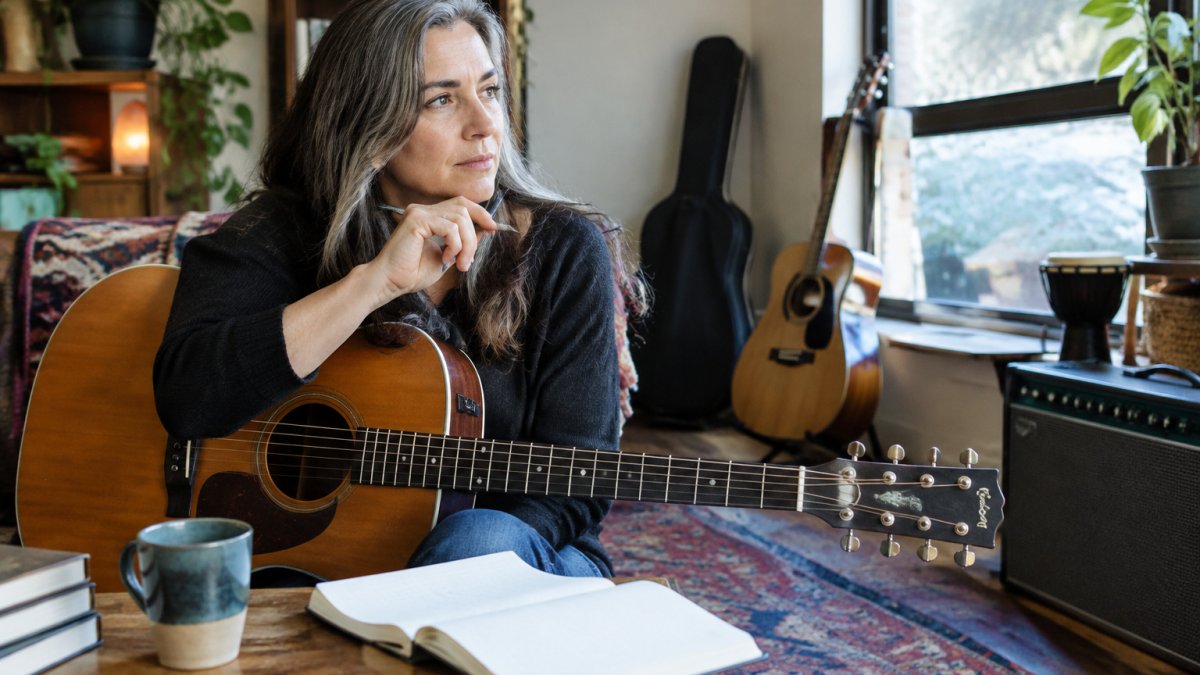
!A mature musician sitting quietly with an acoustic guitar and a notebook in a warm home studio, looking thoughtful during a pause in writing
What coaching adds that a journal cannot
A self-directed musician can run this diagnostic alone, and many do. What coaching adds is accountability on the boring parts, the two-week input diet, the separate evaluation session, the pre-writing downshift, and an outside read on which diagnosis is actually correct. Musicians are notoriously bad at self-diagnosing blocks because the block itself distorts the evidence. A coach who has seen the pattern before can usually tell within one session whether you are dealing with fatigue, fear, or a genuine skill gap, and that saves months of working on the wrong problem.
Artist Development for Musicians Over 40: Finding Your Artistic Identity
Artistic identity is often clearer after decades of work, but it can also become cluttered by other people's expectations. Artist development at this stage is about deciding which parts of your sound and career you want to keep, which to drop, and which to build.
Start by listing the music you are proudest of and the performances that felt most like you. Patterns in those choices usually point toward your core identity. From there, a coach can help you set realistic goals for recording, performing and teaching that fit your energy and schedule.
Self-Assessment Tools and Long-Term Artistic Sustainability
Sustainability means building a creative life you can maintain for another twenty years, not just getting through the next project. Self-assessment helps you notice early signs of overload before they become burnout.
Useful questions include: How do you feel after a typical practice session? Which parts of your week give you energy, and which drain it? When did you last finish a piece of music you were satisfied with? Reviewing answers like these every few months gives you a clearer basis for adjusting your schedule.
Track sleep, recovery days and creative output in a simple journal. Patterns show up quickly, and they give you concrete information to discuss with a coach.
Choosing a Coach and Booking Your First Discovery Session
Look for a coach who understands both the vocal and the creative side of your work, and who has experience with performers over 40. Ask how they approach vocal health, whether they work with artist identity and mindset, and how they measure progress.
If you want to see whether a working relationship makes sense before committing, the Creative Longevity Coaching Discovery Session is a practical first step. The 30-minute call covers where you are now, what performing at your best looks like for you, and whether the next steps should be the Rockstar Master Blueprint or one-on-one coaching. You can also review Does Imposter Syndrome Coaching for Artists Actually Work? before you book, and How Can Musicians Build Sustainable Creative Habits? if you want practical routines to try now.

For readers who want to work independently first, The Rockstar's Blueprint eBook and eWorkbook bundle at 39.00 includes a printable, fillable workbook for mapping rituals and tracking progress.

Frequently Asked Questions
How much do creative voice coaches cost?
Metal Goddess Studios offers a free 30-minute Creative Longevity Coaching Discovery Session, so you can assess fit before committing to anything. The Rockstar's Blueprint eBook and eWorkbook bundle is priced at 39.00 and gives you self-paced tools for rebuilding energy, consistency and creative momentum. Other coaches set their own rates, so compare what each one includes, including whether it addresses mindset and vocal health as well as technique.
How does creative voice coaching differ from traditional vocal training?
Traditional vocal training focuses mainly on technique: range, breath support, diction and tone. Creative voice coaching also addresses the artist behind the voice, including self-doubt, creative blocks, performance anxiety and artistic identity. For musicians over 40 who feel stuck, that broader focus often matters as much as the technical work.
Can voice coaching help me find my unique artistic identity?
Yes. Coaching can help you define what makes your voice and creative output distinct, whether that is your genre versatility, your tone or the stories you tell.
What should I look for in a creative voice coach?
Look for someone who understands the specific pressures of a long performing career, not only beginner technique. Ask whether the coaching addresses creative blocks, vocal health for aging singers and sustainable habits, and whether the approach is tailored to you rather than a generic program. A discovery session is a useful way to test whether the fit is right before you commit.
