
Creative Career Pivot After 50: A Practical Guide
Table of Contents
- Why a Creative Career Pivot After 50 Is Possible, and Increasingly Common
- Reflect on Your Passions, Values, and Career Goals
- Assess Your Transferable Skills and Professional Experience
- Build a Portfolio for Career Changers That Proves Your Ability
- Create a Creative Career Change Plan That Works for Your Life
- Explore How to Make a Living as an Artist After 50
- Artist Accountability Group vs One-to-One Coaching: Which Supports Your Transition
- Low-Risk Experiments: Test Your Creative Pivot Before You Leave
- Frequently Asked Questions
Last Updated: October 21, 2026
Why a Creative Career Pivot After 50 Is Possible, and Increasingly Common
A creative career pivot after 50 isn't a fantasy. Technology, remote work, and audiences hungry for authentic creative voices have made building something meaningful later in life possible in ways that weren't available a decade ago.
At Metal Goddess Studios, we work with musicians and artists over 40 who've hit a wall. Many are burned out or rethinking what they want from their work. The blocks aren't age. They're energy, confidence, and clarity about what's sustainable.
The real question isn't whether you can pivot. It's whether you can do it without burning out further or losing income while you transition. That's where strategy, self-knowledge, and honest planning come in.
Creators over 50 who make successful transitions share three things: they know their actual strengths, they've tested their idea before leaving security, and they've built sustainable habits that protect their health and creativity.
Reflect on Your Passions, Values, and Career Goals
Most people skip this step. Don't. Self-reflection sounds soft, but it determines whether your pivot sticks or becomes another false start.
A creative career pivot after 50 that lasts requires alignment between what you do and who you are now.
Start with three honest questions:
- What did you love about your creative work when you first started? What's changed?
- What parts of your current situation drain you most? (Be specific: is it the pace, the people, the business side, the creative constraints?)
- If money and reputation weren't factors, what would you actually want to create?
Write these answers down, not in your head. Vague thinking stays vague. Written answers force clarity.
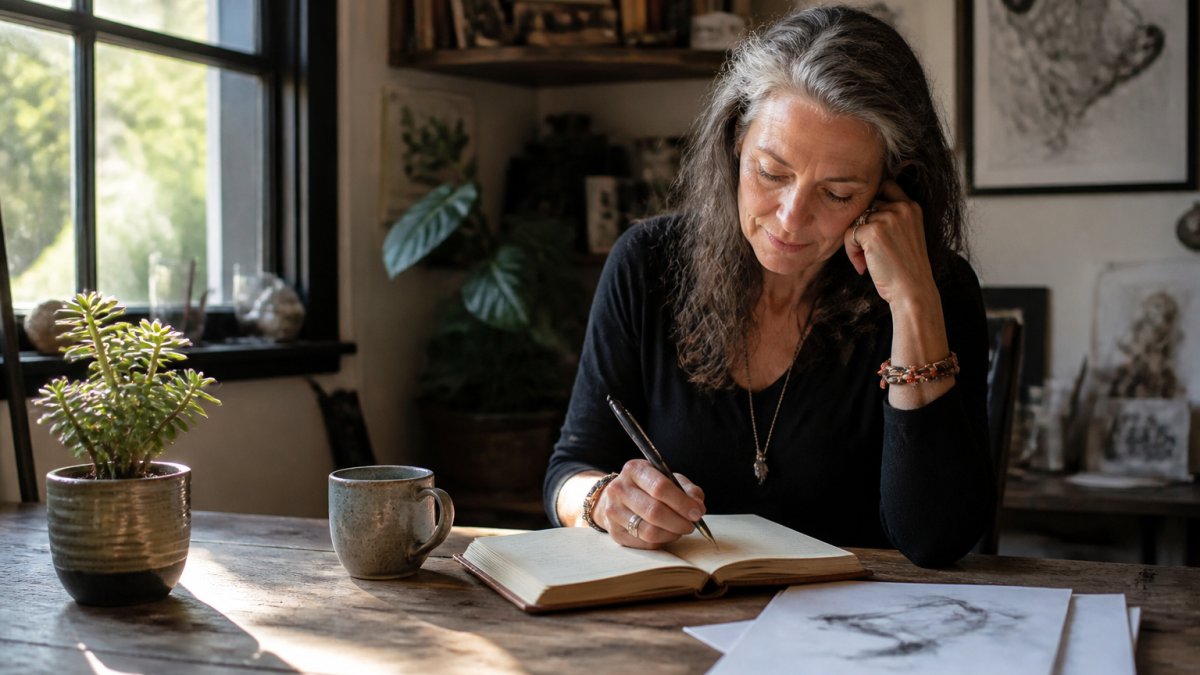
Many artists discover they don't want a different art form but a different relationship to their existing art: less performing, more teaching; less commercial pressure, more personal projects; less isolation, more community.
Your values matter too. If you value autonomy, traditional employment will drain you faster than freelance work. If you value community and structure, solo entrepreneurship might isolate you.
Assess Your Transferable Skills and Professional Experience
Most career-change guides act like you're starting from nothing. You're not. You have 20+ years of professional experience, and the skills you've built are more valuable than you think.
A creative career pivot after 50 succeeds when you can see the bridge between what you've done and what you want to do next. That bridge is your transferable skills.
Start by listing what you actually do in your current work. Not the job title. The real tasks:
- Managing your own schedule and deadlines
- Problem-solving when things go wrong mid-performance or project
- Communicating with audiences or collaborators
- Marketing yourself or your work
- Handling finances and business logistics
- Teaching or mentoring others
- Working under pressure with limited resources
Every single skill transfers. Management experience becomes project leadership. Problem-solving becomes troubleshooting in a new field. Communication becomes client relations or teaching. Marketing becomes self-promotion in a new arena.
The artists and musicians we work with at Metal Goddess Studios often underestimate how much their discipline translates. You've shown up to practice for decades, performed when you didn't feel like it, and recovered from failure. Those are professional habits employers and collaborators value.
Your age is an advantage. You've weathered multiple cycles of change, you know how to learn and persist, and you've likely built networks and credibility a 25-year-old starting fresh doesn't have.
Build a Portfolio for Career Changers That Proves Your Ability
A portfolio for career changers differs from one for someone established in a field. You're not showing 10 years of work in your new direction.
This is where proof of work matters more than credentials. The portfolio answers one question: can you actually do this?
Start by creating work that demonstrates your skills in your new direction. This doesn't mean waiting until you're perfect.
If you're pivoting to graphic design, create 5-10 pieces. A redesigned book cover. A brand identity for a fictional company. A poster series. A website mockup.
If you're moving into creative writing, publish short stories online, start a blog, or enter a contest. The goal isn't fame. It's proof you can finish and ship work.
If you're transitioning to teaching or coaching, create a course outline or lead a workshop. Teach for free if necessary. Collect testimonials. Show that people respond to your teaching.
The portfolio for career changers includes:
- 5-10 best pieces showing your new skill
- A brief statement about your creative approach
- Evidence of audience response (testimonials, engagement, publication)
- Honest context about your experience level and journey
Don't hide that you're transitioning. Use it.
Create a Creative Career Change Plan That Works for Your Life
A creative career pivot after 50 requires a plan that accounts for your actual life, energy patterns, and financial reality, not a rigid five-year forecast.
Most career-change plans fail because they ignore the transition period. You need runway: build while you're still earning, and test before you leap.
Your plan should include:
Phase 1: Build While You're Still Employed (3-6 months)
- Allocate specific hours per week to your new creative direction (10-15 hours is realistic)
- Create portfolio work that proves your ability
- Test your idea with real people (clients, students, collaborators)
- Track what's working and what isn't
- Build small income streams if possible (side projects, teaching, freelance work) Establishing these foundational habits provides the necessary stability for building income streams as you transition into a more sustainable creative chapter.
Phase 2: Increase Your Creative Work (6-12 months)
Creative Longevity Coaching Discovery Session →
- Transition to part-time employment or consulting if possible
- Expand your portfolio and client base
- Build sustainable systems and routines
- Test your income projections against reality
- Strengthen your support network
Phase 3: Full Transition (Month 12+)
- Move to full-time creative work only when you have 6-12 months of expenses saved
- Maintain multiple income streams (don't rely on one client or project)
- Review and adjust your habits and boundaries regularly
The plan removes the false choice between security and change. You're building the new while you still have the old.
Explore How to Make a Living as an Artist After 50
Making a living as an artist after 50 requires a different business model. You're not chasing volume or growth for its own sake. You're building sustainable income that supports your life without exhausting you.
The artists we work with at Metal Goddess Studios often find that their best income comes from combining multiple streams rather than relying on one:
- Direct creative work (selling your art, performing, creating)
- Teaching or mentoring (workshops, courses, one-on-one coaching)
- Consulting or advisory work (using your experience to help others)
- Licensing or passive income (selling rights to your work, digital products)
- Commissioned projects (custom work for clients or organizations)
The mix depends on your skills and preferences. A musician might teach lessons, offer online courses, perform at smaller venues, and license music. A visual artist might sell originals, teach workshops, take commissions, and sell prints.
The key is income that doesn't require peak energy constantly. You can't sustain 60-hour weeks indefinitely. Your model should account for your actual capacity.
Artist Accountability Group vs One-to-One Coaching: Which Supports Your Transition
When you're making a creative career pivot after 50, support matters. You're changing direction, building new skills, and fighting imposter syndrome and age bias.
The question becomes: do you need an artist accountability group or one-to-one coaching?
Artist Accountability Group An accountability group gives you community and peer support. You show up regularly with other artists, share progress, and commit to goals.
The trade-off is that you get general guidance, not personalized strategy. If your situation is complex or your blocks are specific, a group won't dig deep enough.
One-to-One Coaching Coaching gives you personalized strategy tailored to your situation.
The trade-off is cost and intensity. Coaching requires more investment and more vulnerability.
| Support Type | Best For | Time Commitment | Cost |
|---|---|---|---|
| Accountability Group | Motivation and peer connection | 1-2 hours/week | Low to moderate |
| One-to-One Coaching | Personalized strategy and mindset work | Flexible, usually 1 session/month | Moderate to high |
| Combination | Both community and personalized guidance | 2-3 hours/week | Moderate |
Many artists find that a combination works best: a group for regular connection and accountability, plus occasional coaching sessions when you hit specific blocks or need strategy help.
If you're working with Metal Goddess Studios, the Creative Longevity Coaching Discovery Session lets you explore what kind of support actually fits your situation.

Low-Risk Experiments: Test Your Creative Pivot Before You Leave
Before you make a full creative career pivot after 50, test it. Not in theory. In practice.
A low-risk experiment tests your new direction without quitting your job or risking your income.
Here's how to design a low-risk experiment:
Pick a Specific Test (3-6 months) Don't test "can I be a graphic designer." Test something narrower: "Can I design book covers for indie authors and get paid?" or "Can I teach design workshops to local artists?" The specificity matters.
Set Measurable Outcomes What success looks like for your experiment:
- Number of clients or students
- Income generated
- Feedback and testimonials
- Hours required per week
- Your energy level and satisfaction
Run the Experiment While You're Still Employed This is crucial. You're not betting everything. You're testing a hypothesis with limited risk.
Track Everything Keep a simple log of your time, income, and how you feel. This data becomes your decision-making foundation. Gut feelings are unreliable.
Decide Based on Results After 3-6 months, you have real information. Does this work? Do you enjoy it? Is the income realistic?
The artists and creators who successfully make a creative career pivot after 50 almost always do this. They don't leap.
At Metal Goddess Studios, we help musicians, artists, and creators over 40 rebuild the energy and confidence that makes a pivot sustainable.
Your creative work has value. Your experience has value.
Frequently Asked Questions
Is it too late to start a creative career pivot after 50?
No. Many creatives find that the skills, discipline, and confidence built over decades of professional work become powerful assets in a creative career pivot after 50. Your experience with accountability, project management, and persistence translates directly to creative work. The real shift is mindset: you're not starting from zero, you're leveraging everything you've learned to build something meaningful on your own terms.
How do I build a portfolio for career changers when I'm over 50?
Start small and specific. Choose 3-5 projects that demonstrate your strongest work and clearest creative direction. These don't need to be commercial, they can be personal projects, volunteer work, or passion pieces. Include a brief statement explaining your transition and what each project shows about your creative voice. A portfolio for career changers should tell the story of why you're making this move and what you bring that others don't.
How can I make a living as an artist after 50 without financial collapse?
Build a hybrid income model. Combine freelance creative work, part-time employment that funds your transition, teaching or mentoring in your field, and passive income like digital products or licensing. Many artists over 50 maintain a part-time role for 1-2 years while growing their creative income. This reduces pressure, lets you experiment, and gives you runway to build sustainable work without desperation.
Should I join an artist accountability group or hire one-to-one coaching for my career transition?
It depends on your needs. Artist accountability groups offer community, shared experience, and lower cost, valuable if you thrive with peer support. One-to-one coaching provides personalized strategy, faster problem-solving, and tailored guidance for your specific transition. Many creatives use both: group accountability for consistency and community, coaching for strategic decisions. Consider your budget, learning style, and how much personalization your transition requires.